Facebook
 twitter


- irishracing.com
- Cheltenham
- News
- British challenge looking strong for Cheltenham
British challenge looking strong for Cheltenham

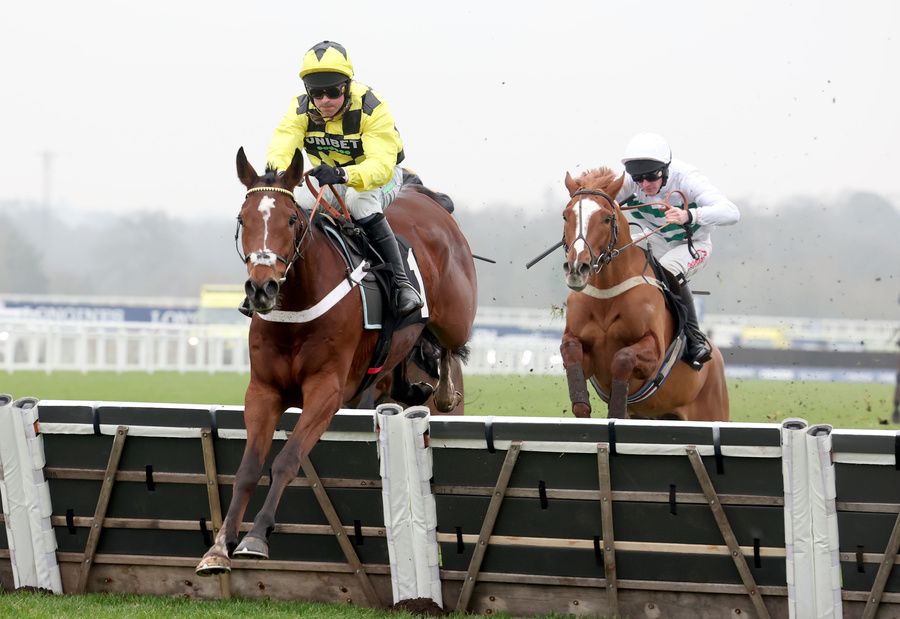 Triumph Hurdle favourite Lulamba winning at Ascot on Saturday
© Healy Racing Photos
As we approach the business end of the National Hunt season there appears to be a shift taking place in the balance of power between the Irish and British trained horses.
Only twelve months ago we witnessed the unprecedented dominance of the Willie Mullins yard when the perennial Irish Champion Trainer added a first British Trainers’ Championship to his CV and hoovered up virtually every key race in the calendar - Champion Hurdle, Gold Cup, Grand National - and won all eight Grade One contests at the Dublin Racing Festival, before then matching that with a similar haul of Grade One races at the Cheltenham Festival in a stellar season.
This time around Mullins remains the dominant force in Ireland. He currently trails his great rival Gordon Elliott by €280,000 in the Irish Trainers’ Championship - €2.3m to €2.6m - but that is only loose change to the pair that had a combined Irish prize money haul of €11.75m last season.
Last season Mullins’ total Irish prize money ended breaking through the €7m mark for the second season in a row and currently operating at a very healthy 24% win strike rate there is little to suggest he won't retain his Irish Trainers’ Title.
In Britain, on the other hand, it has been far from plain sailing for Willie Mullins. In the last month he has sent over five Grade One class horses to compete - Mystical Power, Lossiemouth, Ballyburn, Kargese and Energumene - and all five have been beaten.
There may be individual excuses for one or two of them, but overall there is a suspicion that the best of the British-trained horses are going to be extremely difficult to beat at the upcoming Spring Festivals this season.
Certainly the big guns coming out of Nicky Henderson’s yard look particularly strong this season. Old favourites Constitution Hill and Jonbon have been joined at the head of Cheltenham ante post markets by another pair of exciting prospects from Seven Barrows, Sir Gino and Lulamba. And Henderson is yet to take the wraps off his most expensive recruit, the €1.4m German Derby winner Palladium.
Mullins currently languishes in 58th place in the British Trainers’ Championship, some £1.8m behind pace-setter Dan Skelton in prize money won. He will need to repeat last season’s tally of Champion Hurdle, Gold Cup and Grand National just to get himself back in the race for the title, but I suppose you couldn’t rule anything out when it comes to the master of Closutton.
In all of this you have to wonder what are the reasons that the British trainers are suddenly back on the up after a decade of decline. It is only ten months since British Horseracing Authority Chief Executive Julie Harrington issued a statement in the immediate aftermath of the 2024 Cheltenham Festival that bemoaned the success of the Irish-trained horses in Britain’s top races:
“The Irish domination of the Grade 1 races this week has illustrated that the issue is becoming more pronounced and more damaging for the sport on both sides of the Irish sea.
“We must do more, more quickly, and in a more coordinated and decisive manner if we are going to restore British Jump racing to the standing at which it belongs.”
It may not have been quite the Churchill-esque rallying cry of “we shall fight on the beaches,” but did contain a similar sentiment.
A record 12 of the 14 Grade One races at Cheltenham were won by Irish-trained horses in 2024.
At this stage of the season you would get very long odds about a similar drubbing taking place this time around. British-trained horses are currently favourite or joint-favourite for half of this season’s Grade One contests at Cheltenham, with several of them looking like they could go off odds-on if turning up on the day.
Could Harrington’s statement really have had such an instant impact on her industry’s fortunes? Or maybe it had something to do with: “An additional £3.8m in prize money has already been earmarked for investment in 2024 across the top end of the sport in both codes.”
Perhaps it is simply down to luck, but when you see the prices that have been paid for many of the top jumps horses currently in training in Britain it could be a case of the more they spend, the luckier they get.
If the British-trained runners do turn the tables on their Irish counterparts at Cheltenham I wonder will we see Suzanne Eade issue a similar statement on behalf of Horse Racing Ireland. Probably not, but a similar increase in Irish prize money would be welcomed across the board.

Latest Stories which may interest you